
As global economies contract because of the Covid-19 pandemic, the focus of most of the India Inc has now moved back to the home market where demand is expected to pick substantially from the coming festival season.

India Inc's investments abroad in April-June 2015 have once again risen to $1.3 billion.

'India Inc has been afraid to criticise the government of the day for many years now, and it is perhaps unfair to blame the current one alone,' says Shyamal Majumdar.

Corporate India is indicating cautious hiring in the March quarter of 2023 as concerns rise over possible recession and steady inflation, a survey said on Thursday. According to the ManpowerGroup Employment Outlook Survey, based on interviews with nearly 3,030 public and private employers, hiring intentions will decrease in the quarter both on year-on-year and quarter-on-quarter basis. During the quarter, 48 per cent employers expect to increase their staffing levels, 16 per cent anticipate a decrease in hiring intent and 34 per cent do not anticipate any change in hiring, resulting in a net employment outlook of 32 per cent.

Convert the Haryana result into a blessing in disguise; make the calamity into an opportunity. Maharashtra was always the big ticket game in town; MVA must win it. The Congress should shift headquarters to Mumbai for the entire month. Show urgency and a hunger to win, asserts Sanjay Jha.

As Covid-19 cases recede, India Inc is once again tweaking work rules. Big tech companies such as TCS, Wipro and Infosys have either begun or are in the process of calling employees back to office in a staggered manner. A survey by Aon, a global professional services firm, has found that 60 per cent of tech firms now expect every second employee to come to office. More than half of the employees working in engineering and manufacturing firms are also being asked to return to work.

The early bird results for the January-March 2022 quarter (Q4FY22) hint at a slowdown in corporate sector growth in the upcoming quarters. The combined net sales of the 81 early bird companies in the Business Standard sample were up 15.1 per cent year-on-year in Q4FY22; this was less than the 15.9 per cent YoY jump reported in Q3FY22. The slowdown could be much stronger for the domestic market-focused companies, including those in the banking, finance, and insurance (BFSI) space.
India Inc is set to post an 18-20 per cent revenue growth for July-September as compared to the year-ago period, domestic rating agency Crisil said on Thursday ahead of the filing of quarterly earnings by companies. The handsome growth in the topline will be driven by both higher volumes and higher commodity prices, the rating agency said. However, the rising input prices may have capped operating profit margin expansion for companies when compared to the preceding quarter, the agency said.
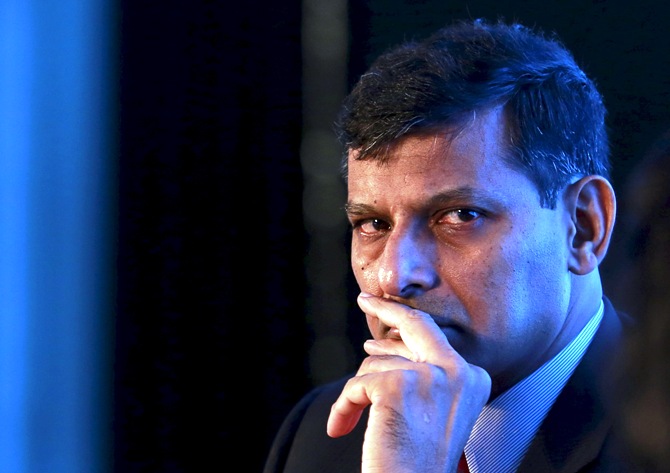
India's captains of industry said they were disappointed at the exit of Reserve Bank of India Governor Raghuram Rajan.

Broader sentiment of lack of transparency bothers most in India Inc.

Leaders of the Indian National Developmental Inclusive Alliance (INDIA) have decided to raise the NEET issue in both houses of Parliament on Friday and members will give notices in this regard, sources have said.
A strong performance by sectors including banking raised the profits of Indian companies by 28 per cent in the three months ended March 2022. The rate of growth is, however, lower than the 30 per cent seen in December. Growth in net sales was also lower than what was seen in the December quarter for the sample under consideration.

Japan's Softbank investment arm Softbank Vision Fund exited from Paytm in the June quarter at a loss of around $150 million, sources aware of the development said. Softbank invested about $1.5 billion in One97 Communications -- the owner of Paytm brand -- in tranches in 2017. "Softbank has exited Paytm at a loss of 10-12 per cent.
India's top listed companies reported their best-ever quarterly net profit of Rs 2.39 trillion in the September quarter of FY22, up 46.4 per cent year-on-year. The earnings were driven by a big surge in the profitability of banks, non-banking financial companies & insurance (BFSI), oil & gas, and metal & mining firms. The combined net profit of these three cyclical sectors were up 87 per cent YoY to a record high of Rs 1.53 trillion, up from Rs 82,000 crore a year ago and Rs 1.08 trillion in Q1FY22.

India is all set to make its presence felt in the $47 billion global outsourced semiconductor testing and packaging market, an arena where Malaysia and Vietnam have been way ahead so far. The Cabinet last Thursday cleared two projects, the Tata's assembly testing and packaging plant (ATMP) and the Murugappa-owned CG Power with Renesas from Japan as its tech partner. These, together with Micron's assembly and testing plant which is already being constructed in Sanad in Gujarat, will collectively invest Rs 47,300 crore to set up the factories.

From offering office premises that can be converted into isolation wards to earmarking funds to be used for procuring kits, ventilators as well as personal protective equipment for health care workers, India Inc has put a united front to combat the unprecedented crisis facing the country.
In 2020-21, Indian firms offered to buy back shares worth Rs 39,295 crore, or 97% more than Rs 19,972 cr proposed in the previous financial year.

Corporate results confirm worst fears about growth trajectory.

Amid current geopolitical challenges and a slowdown in global growth, veteran emerging market investor Mark Mobius called India a safe haven for investors, backed by a stable government. The renowned investor, who is excited about the opportunities available in India, said the country is now the second largest in the portfolio of Mobius Capital Partners after Taiwan. Calling India a "land of opportunities and innovation", he said that his optimism about India is driven by the stable government and young demographic, with an average age of 27 years.

Over the weekend, many companies stepped in to ease the bottleneck in supply and transportation of oxygen, as demand ran high with the surge in cases.

Have you wondered how many days of work -- depending on your net monthly income -- you would have to put in to buy the top-end iPhone 16 Pro?
Reliance Industries, construction major L&T and IRB Infrastructure are some of the top companies that have used an infrastructure investment trust structure to reduce part of their debt and generate returns for their investors. Earlier this month, IRB Infrastructure InvIT was listed on the National Stock Exchange, giving its investors an option to exit by selling their units. The listing came within months of the Securities and Exchange Board of India's (Sebi's) guidelines for conversion of private unlisted InvITs into listed ones were issued.

Industry leaders, including Mahindra Group chairman Anand Mahindra, RPG Enterprises chairman Harsh Goenka and Biocon Ltd chairperson Kiran Mazumdar-Shaw on Monday came out in support of the Agnipath scheme, saying it has large potential for employment of youth in the corporate sector. Mahindra also expressed dismay over the violence against the scheme while asserting that the farm equipment to aerospace conglomerate welcomes the opportunity to recruit trained, capable and young people under the programme. The Agnipath scheme, announced on June 14, provides for the recruitment of youths between the age bracket of 17-and-half years to 21 for only four years with a provision to retain 25 per cent of them for 15 more years.

Apple Inc is expected to produce iPhones worth $12 billion (freight on board value) in India during 2023-24, according to discussions between the company's vendors and the government. This would account for around 12 per cent of Apple's global iPhone production-higher than the earlier plan of shifting around 9 per cent of the total to India by FY24, which is the third year of the PLI (production-linked incentive) scheme.

Corporate India continues to be generous in rewarding its shareholders with big dividend payouts. This is especially true for shareholders of companies such as Tata Consultancy Services (TCS), Hindustan Zinc (HZL), and Coal India (CIL) which are seen as cash cows of large business groups and the government. Boosted by a big payout by these three companies, the combined equity dividend payout by listed companies was up 38 per cent year-on-year (YoY) to a record high of Rs 2.27 trillion in 2022-23 (FY23), compared with Rs 1.65 trillion in 2021-22 (FY22).
Making strong inroads in the global acquisition arena, Indian companies have won many big ticket deals and acquisitions.

India will not tailor its policies to suit US EV maker Tesla, and its laws and tariff rules will be formulated to attract all-electric vehicle manufacturers from across the world to set up a base in the world's fastest-growing economy, Commerce and Industry Minister Piyush Goyal said. Tesla has been seeking an initial tariff concession that would allow it to offset 70 per cent customs duty for cars priced less than $40,000, and 100 per cent for cars of higher value.

United States Secretary of State Hillary Clinton on Saturday had a breakfast meeting with top honchos of India Inc at the iconic, sea-facing Taj Hotel in Mumbai. Amongst those from India Inc who were present at the meeting included Ratan Tata, chairman of Tata Group and Reliance Industries' Mukesh Ambani. Others present were the chiefs of India's two largest banks, O P Bhatt of State Bank and Chanda Kochhar of ICICI Bank, Swati Piramal and Sudha Murthy.

'His contribution not only elevates our institution but also serves as an inspiring example of how our alumni community continues to drive meaningful change.'

India Inc's profit share in the country's GDP at 15-year low in 2018. Since 2013, net profit for top 500 companies has remained in the range between Rs 4 trillion and Rs 4.8 trillion despite steady growth in nominal GDP.

Glimpses of India's first Apple retail store that will be launched on April 18, 2023 at the Jio World Drive Mall, Bandra Kurla Complex, north west Mumbai.

India Inc has started lobbying with the government to compensate them by giving tax incentives on the funds spent on CSR.
Brokerages expect Nifty50 companies to have cumulatively witnessed strong double-digit growth in their earnings in the first quarter of FY24 (Q1FY24). This growth in the combined earnings is expected to have been driven by banks, automakers, and oil & gas companies. Other sectors may report muted profit growth.

'The die is cast. The wave is for her.' 'We will win this. The numbers are going to be higher than people are saying.' 'It is going to be more closer to Obama's numbers than Biden's numbers.'

'Kerala isn't as dependent on agriculture like Bihar or Odisha or even other southern states.' 'Economic losses would not be too intense, unlike other states.' 'The floods could, at best, impact India Inc's earnings for a quarter or two.'

Global coworking player WeWork has filed for bankruptcy in the US and has also started a comprehensive reorganisation and restructuring process to cut debt and strengthen its balance sheet. NYSE-listed WeWork Inc said that its centres located outside the US and Canada will not be part of this proceedings. Softbank-backed WeWork Inc, which was once valued at $47 billion, had reported a net loss of $696 million in the first half of this year.

'India has a skill shortage of 56%.' 'This is a very interesting paradox -- the unemployment rate is 6% to 7%, and at the same time 20% of those qualified are unemployed.'
In absolute terms, capex spending has risen by Rs 228,000 crore (Rs 2,280 billion), despite declining profits and a 37 per cent decline in fund flow from financial markets in 2008-09. The capital-intensive sectors of India Inc do not find the current environment a deterrent to push ongoing expansion and so they continue with capex plans. The study looks at 323 listed companies whose capex spending data for 2008-09 is available.
 © 2026 Rediff.com - Advertise with us - Disclaimer - Privacy Policy - Sitemap - Feedback - About us - Terms of use - Grievances